
From 'You Did a Good Job' to Real Feedback : How St Monica's transformed student feedback with Nurture
St Monica's Primary School, Oakey

Australia
.webp)
The Problem
Good Intentions, No Time
Sarah has been teaching at St Monica's Primary School in Oakey, Queensland for long enough to know what good feedback looks like. She has seen the difference it makes when a student understands not just that something didn't quite land, but exactly why and what to do about it. The problem was never intention. The problem was time.
"Prior to Nurture, I think we never really prioritised feedback," she says. "We tried to, but because of the time constraints we just never had the time to go into depth with feedback."
In a busy primary school classroom, the maths is unforgiving. A class of thirty students. A writing task every week. Even five minutes of genuine, specific, written feedback per student adds up to two and a half hours of marking, before grading, lesson planning, pre-tests, and everything else that fills a teacher's day. So feedback got squeezed. Students received ticks, brief comments, and the kind of well-meaning but ultimately vague encouragement that leaves a learner no clearer on what to do next.
The students felt it too. Arabella, now in Year 6 at St Monica's, put it simply when asked what feedback looked like before Nurture: "I didn't really get much feedback before it. I would just get like, 'you did a good job.'" It wasn't that Sarah's feedback was unhelpful. There wasn't enough of it, and what there was could not go deep enough. For a student like Ruben, one of Sarah's highest-achieving writers, generic praise offered nothing to build on. He needed to know specifically what he was doing well and where the ceiling was. He wasn't getting that.
Prior to Nurture, we never really prioritised feedback. We tried to, but because of the time constraints we just never had the time to go into depth. Whereas now we can read through what the AI has generated for us, modify it to suit our students, and give specific feedback to help them improve and see where they go.
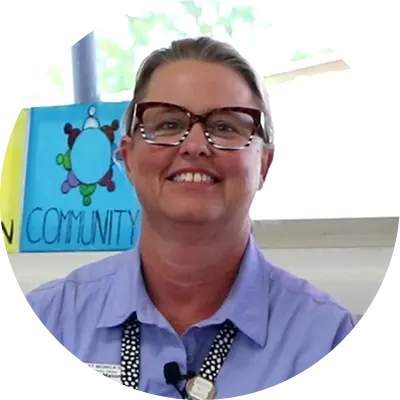
Sarah
Teacher, St Monica's Primary School, Oakey
Early Experience
Too Much Feedback, Then Just Right
When St Monica's began using Nurture, the first thing Sarah noticed wasn't a smooth rollout. It was surprise, and not entirely the good kind. The platform was generating feedback at a depth and level of specificity that her students had never encountered before. Where they were used to a brief comment or a grade, they were now receiving detailed, structured responses that identified patterns in their writing, named specific strengths, and laid out clear, personalised targets for improvement.
"When we first started using Nurture, it was probably a little bit confronting for them because of the depth of feedback that they were getting. It was quite overwhelming for some of them," Sarah recalls. Students who had only ever received surface-level responses were suddenly being told, in precise terms, what needed work. At first, that felt like criticism. As Arabella puts it: "When you first get it, you're like, I did a really bad job at this, it's not really good."
But the reaction did not last. The more students read, the more the feedback started to make sense not as a judgment, but as a roadmap. "The more you look into it, and if you don't understand it and get your teacher to help explain it, it's actually really just trying to help you make your writing even better," Arabella says. "And I've learned from that, and it's really what's made me a good writer, I think."
Sarah built classroom practice around the shift. She introduced a 'two wishes and a star' reflection exercise: students identify two things from their feedback that went well, then set one specific goal for their next piece of work. It turned feedback into something they were actively using rather than something that happened to them.
When we first started using Nurture it was quite overwhelming for some of them. Whereas now they're starting to see it from that less emotional side and seeing it as a way to improve their writing. Their thinking brain is switching on.
Sarah
Teacher, St Monica's Primary School, Oakey
The Result
Feedback That Means Something
The transformation at St Monica's hasn't been dramatic or overnight. It has been steady, concrete, and unmistakable to the people inside the classroom.
Sarah describes a class that has fundamentally changed its relationship with feedback. "This cohort have really embraced using it. They want to know their feedback. They're excited now to know where to next and how they can improve."
For Ruben, the most obvious change is in his writing itself. He can trace his improvement in descriptive language directly back to the specific feedback he has received through Nurture. "Today it said that I use really amazing descriptive language, and last year I didn't use nearly as much." He has also changed how he engages with feedback, moving from scanning it quickly to reading carefully and working out why something landed or didn't.
Arabella's growth shows up in the quality of her thinking about her own writing and her peers'. Where last year, sharing a piece with a classmate would generate feedback like 'this part was good, I didn't like the end,' those conversations are now richer and more specific. "Now, because we've used Nurture, it's like 'this part was really entertaining and exciting, and I didn't like this part because…' It's really good now."
For Sarah, the impact is also personal. Nurture has changed what she is able to give: "We can read through what the AI has generated for us. We can modify it to suit our students. And it has just really helped me be able to give specific feedback to kids to help them improve and see where they go."
I didn’t really get much feedback before it. I just got like ‘you did a good job.’ And then now that we’ve used it more, the feedback’s really helpful and it can help you become a better writer.
Ruben
Year 6 Student, St Monica's Primary School, Oakey
Join
 St Monica's Primary School, Oakey
in making Formative Assessment & Feedback your school's edge
St Monica's Primary School, Oakey
in making Formative Assessment & Feedback your school's edge

Book a short call with a founder to find out how Nurture can work for your school.


