
How Do You Know If Students Have Learned? Why a senior leader at All Saints College is rethinking formative assessment with Nurture
All Saints College

Australia
The Reality
Time Gets in the Way of Real Feedback
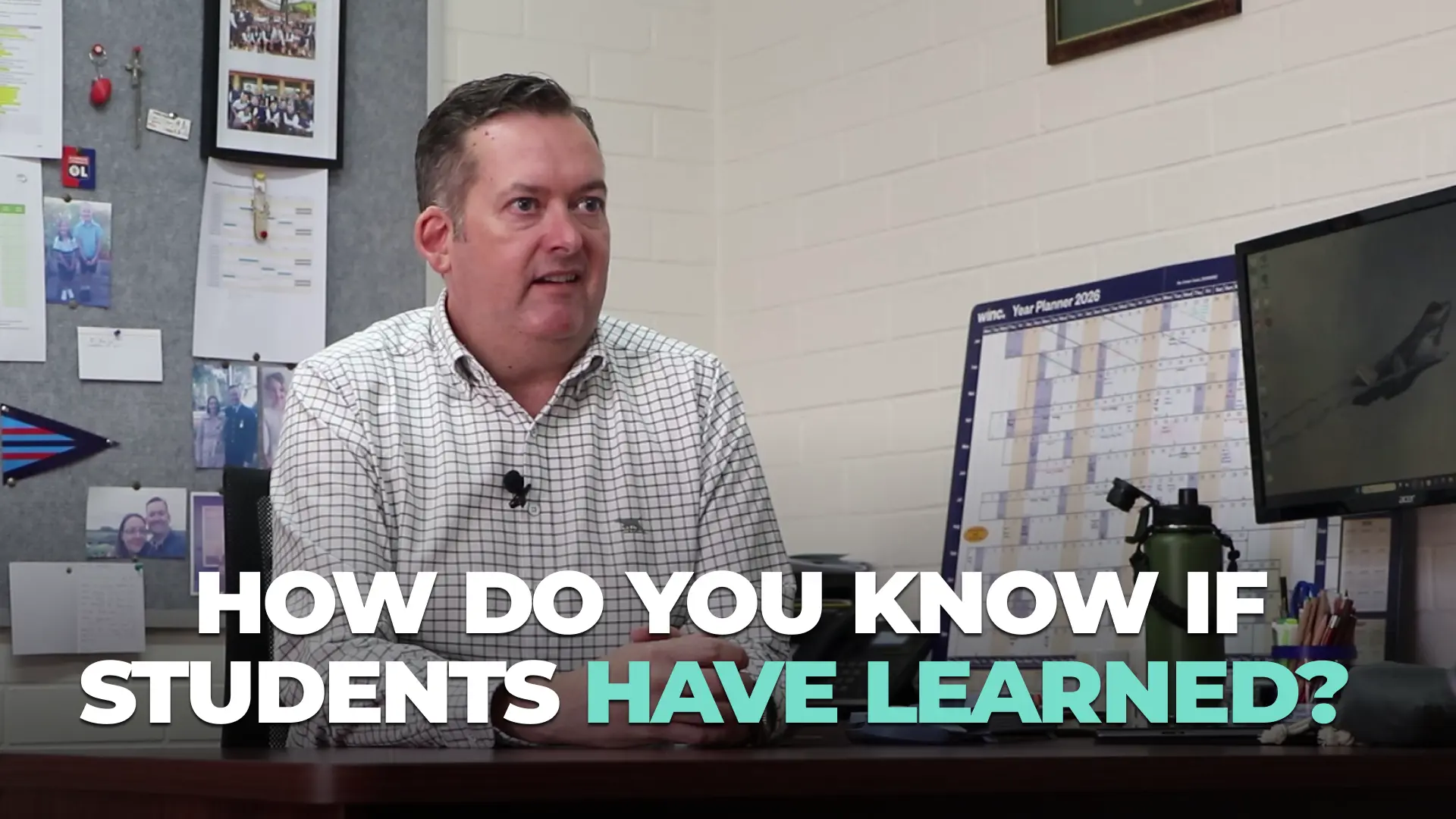
Jim Shackleton, Assistant Director of Senior School for Teaching and Learning at All Saints College, hears the same question from students and parents in nearly every interview: how am I going in your subject? It is a deceptively simple question, and one Jim has come to believe is harder to answer than it should be.
The honest answer usually depends on anecdote. A teacher's sense of how a student behaves in class, how they apply themselves, what their notes look like. The actual evidence sits at the end of topic tests, by which point the learning is finished and the assessment is measuring achievement against a standard rather than guiding the next step.
Jim believes most teachers know that formative assessment matters, because learning is iterative. Students improve by making mistakes, refining their thinking, and trying again. The thing that gets in the way is time. Class loads, administrative work, and the sheer mechanics of setting tasks, collecting them, and marking them in a way that genuinely benefits every student. So formative work gets squeezed, and the focus drifts back to summative outcomes because that is how teachers and students are measured.
The cost is significant. Without formative feedback in place, both teachers and parents are left forming a picture of a student based only on their endpoint, not on how they got there. For a school that cares deeply about each student's holistic development, Jim sees that as the wrong tradeoff, and the gap that needs closing.
The thing that gets in the way of formative assessment, of course, is time.
Jim Shackleton
Assistant Director of Senior School for Teaching and Learning, All Saints College
What's Hidden
Notes Don't Mean Understanding
In a well-managed classroom at All Saints, things can look like they are working. Screens up, students attentive, notes neat and copious. But Jim has learned not to confuse visible compliance with comprehension. As he puts it, students may have pages of beautifully presented and aesthetically pleasing notes, but whether they have actually learned anything from them is another question entirely.
The deeper issue is that students at All Saints, like students everywhere, are increasingly reluctant to expose uncertainty in front of their peers. They will not raise their hand when they are confused. They will not even confirm an answer when they have one, in case they are wrong and become a target for ridicule. So the questions go unasked, and the teacher loses the most important signal they have about who actually understands the work.
By the time a summative assessment arrives and the gaps become visible, the window for doing something about it has usually closed. Jim describes this as giving advice after the horse has bolted. Useful as a postmortem, but not as a tool for moving learning forward.
What Jim wants is a comfortable environment where students can learn and grow without the social cost of asking. Nurture gives students a private channel to engage with feedback, ask questions, and admit confusion without judgement from peers. It restores a signal teachers had been losing, and it makes the safe environment Jim believes real learning depends on.
We see many students have copious pages of very well-presented notes, but have they learned anything? We're not quite sure.
Jim Shackleton
Assistant Director of Senior School for Teaching and Learning, All Saints College
The Vision
Tangible Goals for Every Student
Jim's vision for what great teaching looks like is specific. Not generic encouragement, not vague advice, not the kind of parent meeting that ends with 'they are well behaved, they should do a bit more homework, encourage them to attend our homework classes.' That kind of feedback is impersonal and, in his words, the horse has already bolted.
What Jim wants instead is rich parent conversations, grounded in real data, where every student leaves with tangible and achievable goals. That requires formative assessment to happen regularly and meaningfully across the school, so teachers know exactly where each student is strong and where they need support. The advice then becomes specific and actionable, rather than generic.
There is a mantra at the College that shapes how Jim and his colleagues approach this work: what would I do if this was my child? It is the lens that frames every decision about teaching and learning. If a tool can lift student outcomes, strengthen pedagogy, and build a more positive relationship between students and staff, teachers come on board for it because they can see the value of taking a student through the full journey.
With Nurture, Jim sees a path toward that future. A school where formative feedback is a routine part of how students learn, where parent meetings are built on accurate evidence rather than impressions, and where students are led through the journey of learning so their outcomes are maximised. The endpoint matters, but the path to it matters more.
What we want to do is have tangible and achievable goals for each student.
Jim Shackleton
Assistant Director of Senior School for Teaching and Learning, All Saints College
Join
 All Saints College
in making Formative Assessment & Feedback your school's edge
All Saints College
in making Formative Assessment & Feedback your school's edge

Book a short call with a founder to find out how Nurture can work for your school.


